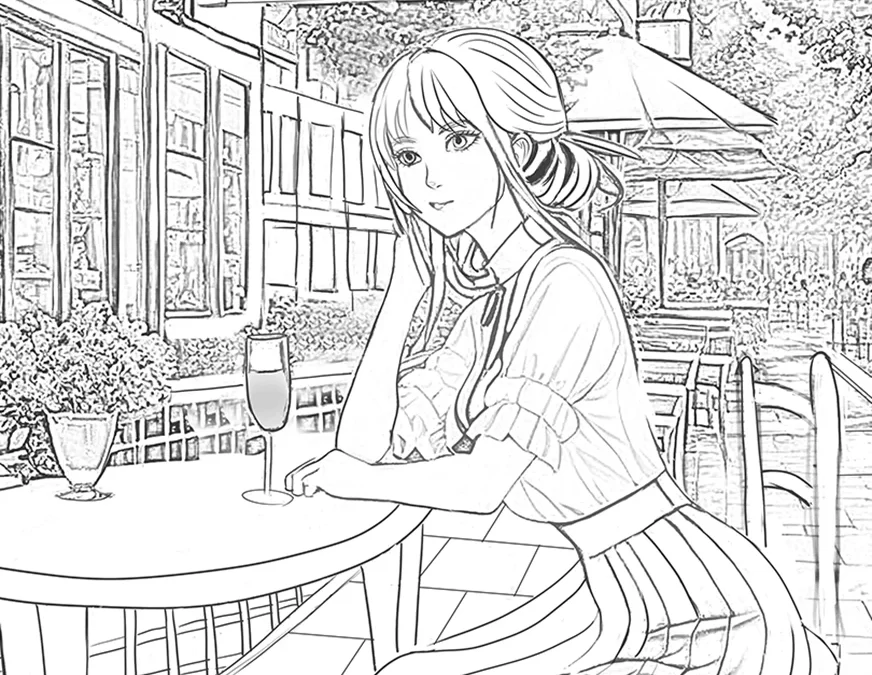
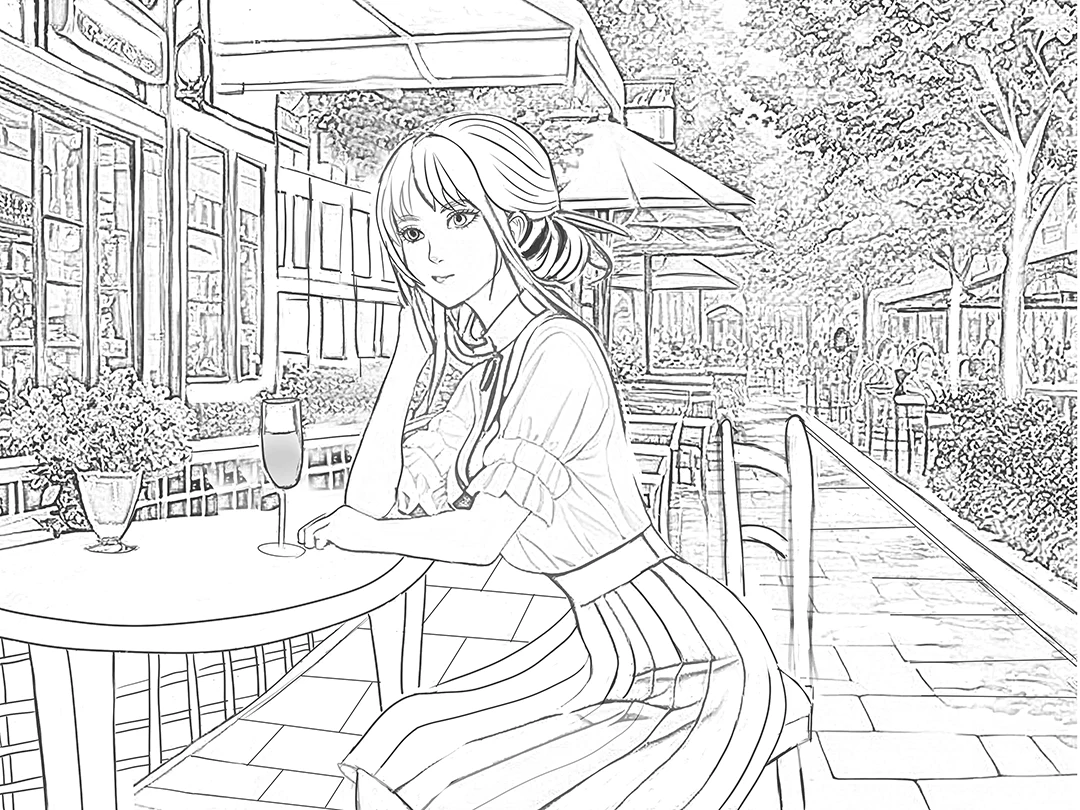
When I started college, I wasn’t sure what to major in. My mom suggested I try art because she knew I loved crafts and making things. And she knew I loved drawing the human figure. So, with her encouragement, I started as an art major. There wasn’t a face and figure drawing class at the beginner level. Most of us who study art in college begin with Drawing 101. And that’s where I started. But my first drawing class convinced me I’d never learn to draw well enough to be an artist. It was a disheartening experience, and I eventually switched my major to botany.
It wasn’t until many years later I found a small window of free time during my son’s afternoon naps that I tried my hand at drawing again. I pulled a book off my shelves that had been sitting there a very long time. That book was Betty Edward’s “Drawing on the Right Side of the Brain.” Working through the exercises in that book, I realized realistic drawing is a skill we all can acquire.
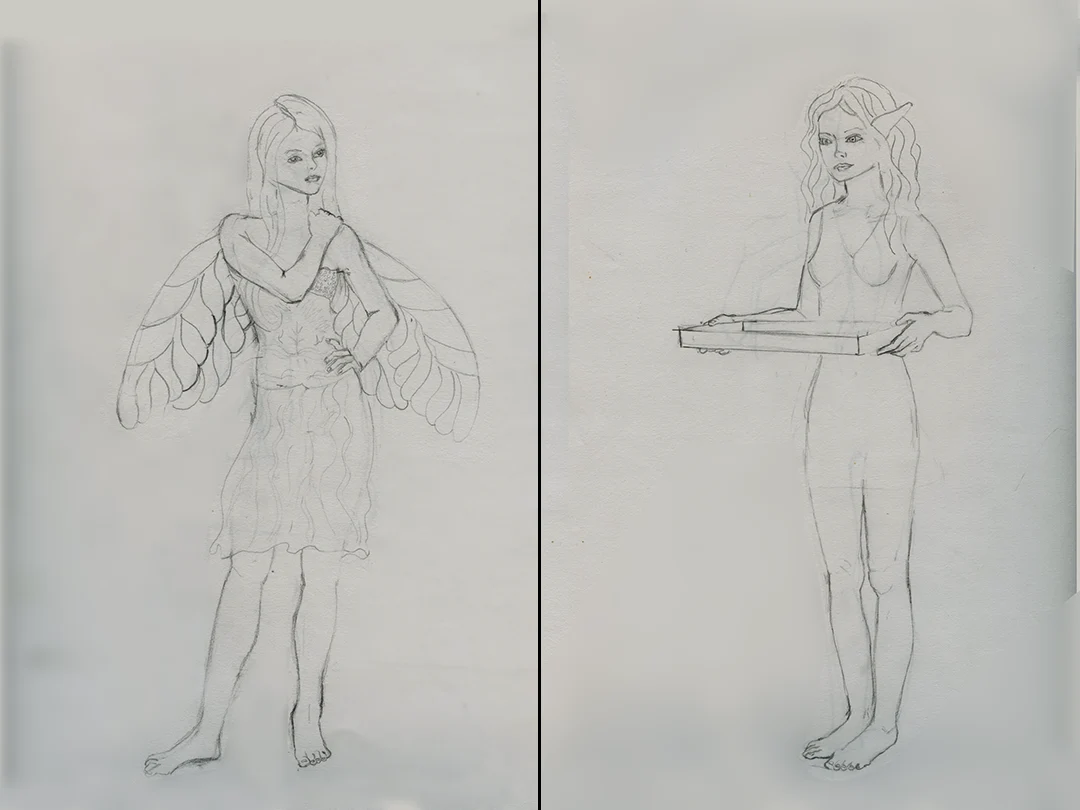
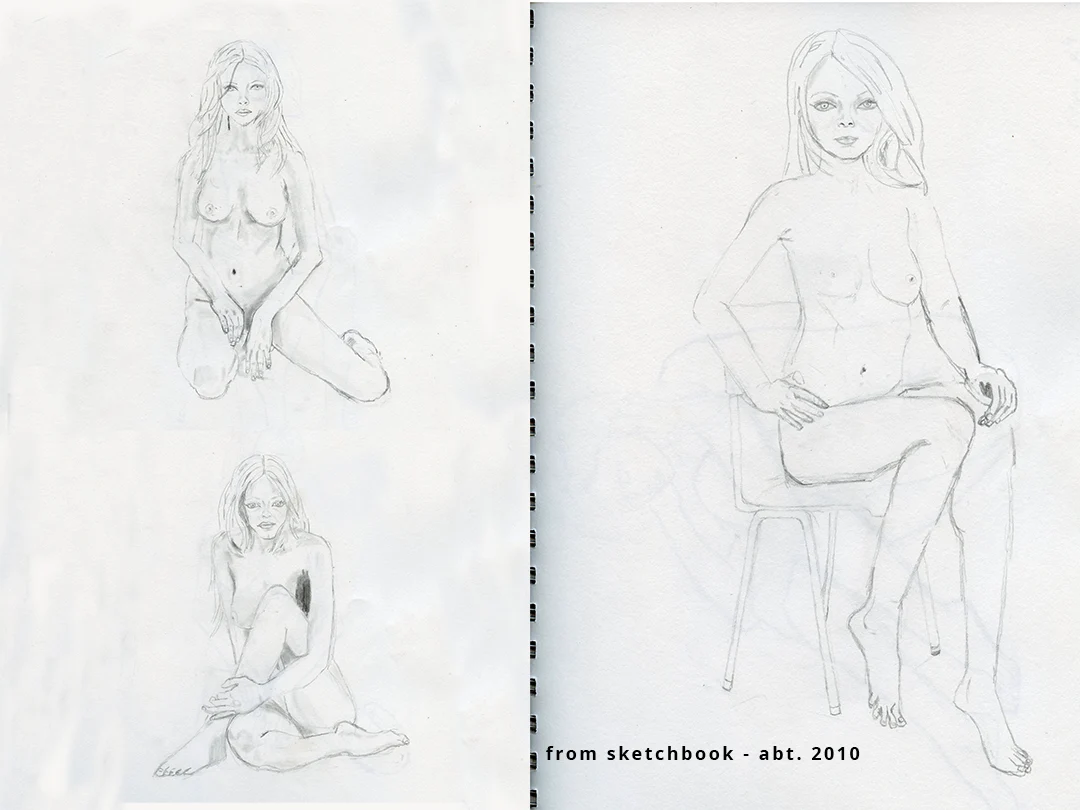
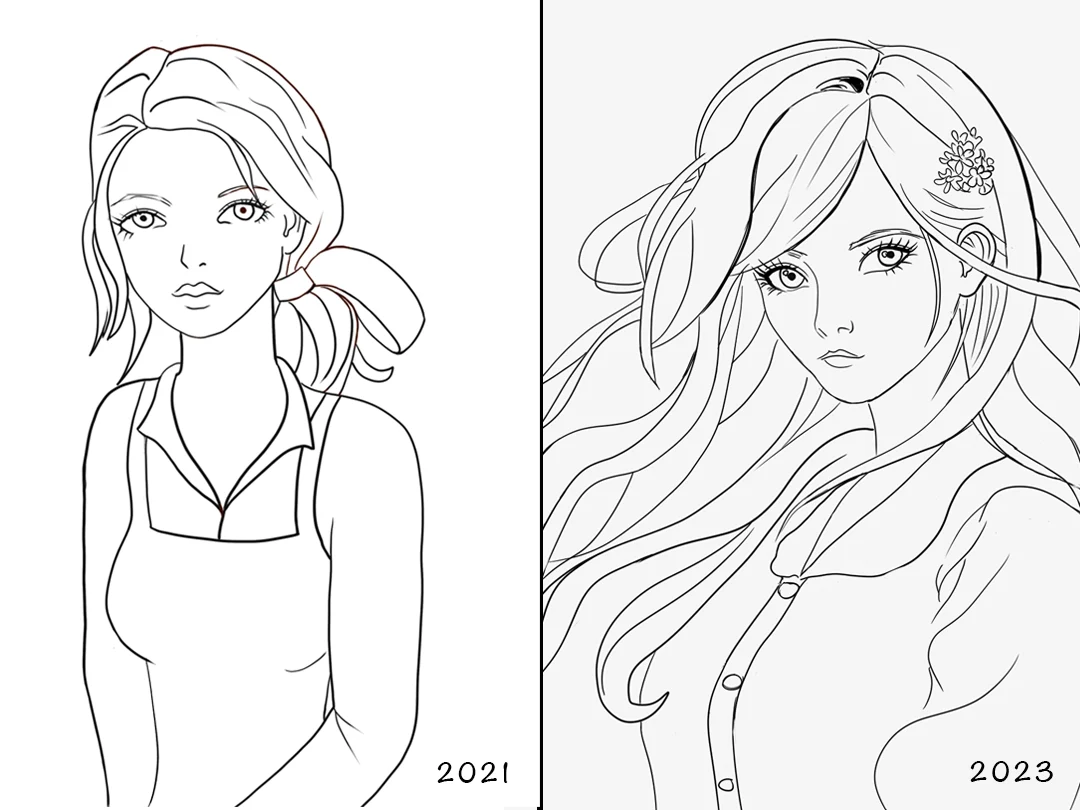
Drawing realistically takes practice and patience. I practiced drawing portraits of people and animals, gradually improving my skills. I also learned various techniques from “Drawing on the Right Side of the Brain,” such as negative space drawing, upside-down drawing, and contour drawing. If you decide to practice drawing, keep your old sketchbooks! They are an inspiration and a visual diary showing what you were interested in at the time. They are also a record of your improvement. Below are some sketches from a notebook I worked on over 10 years ago. Keeping a record of your journey allows you to track your improvement much better than comparing yourself to artists with more experience.
This article is written for those who wish to learn to draw with some practical tips to get started drawing figures, which is one of my favorite subjects. If that’s you, read on, it’s never too late to learn to improve your drawing.
Figure Drawing: The Magic of Capturing the Essence of a Person
The best part about drawing is anyone can learn. Even if you think you can’t draw a stick figure to save your life. It might sound like a tall order, but it’s entirely possible. I promise.
In this post, we’ll take a quick journey through all the basics. I’ll then delve deeper into each aspect in future blog posts.
So, grab your pencils and sketchbook, and let’s discover how to draw faces and figures together. You might surprise yourself with what you’re capable of!
Note: Although this blog post focuses on pencil drawing, the same techniques are used in drawing digitally. Grab your tablet or iPad and follow along if you prefer to draw digitally. Look for the beginner tutorials to on my blog or the web for using Procreate and Clip Studio Paint if you are new to digital drawing.
The Essential Art Supplies for Your Face and Figure Drawing Adventure
Before delving into the techniques of drawing figures, it is crucial to gather suitable materials. Don’t worry. You don’t need an extravagant supply of art studio-grade materials. In my early stages of learning to draw, I used a number 2 graphite pencil and ordinary typing paper. It is important to note that consistent practice outweighs the tool’s quality. Here are a few suggestions:
Paper and sketchbooks: Opt for a sketchbook or a pad of drawing paper with a medium weight and texture. Steer clear of ultra-smooth or overly rough papers, as they can make it challenging to achieve the desired effects in your drawings.
I have sketchbooks scattered all over my house. Some are still in progress, while others are full. I enjoy keeping the old ones to see how much progress I’ve made. One of my favorite drawing pads is the Strathmore Sketch Paper 300 series.
Graphite pencils: Look for a range of pencil grades (e.g., HB, 2B, 4B, 6B) to try out. Generally, I draw with an HB pencil. However, I like to have a heavier pencil to darken some of the lines in my finished drawing.
You can also use a mechanical pencil. I know many artists love their mechanical pencils, but I’m constantly breaking leads when I use one. My favorite pencil sharpener is the T’GAAL pink plastic sharpener from Japan, which sharpens my pencils to a fine point.
A Study of Anatomy Enhances the Believability of a Figure Drawing
Skeleton: Acquaint yourself with the skeletal structure. It establishes the framework for the human body.
Muscles: Learn about the primary muscle groups and their influence on the body’s appearance and movement. Knowing the names of the muscles is not necessary for accurate drawing. However, it’s helpful for understanding which body part the teacher is referring to if you attend a figure drawing class.
Skin and fat: Learn how drawing skin and fat layers affect the body’s contours and how they add depth and dimension to your drawings.
Understanding Perspective
Perspective and foreshortening are essential for producing believable three-dimensional drawings. Noticing, for example, how objects appear to shrink as they recede into the distance or look larger than their actual size when in the foreground. Manga artists often exaggerate this illusion even more by enlarging a hand or foot that is coming toward the viewer.
There are some excellent anatomy books designed for artists. The essential muscles to memorize are the ones directly beneath the skin. It’s also helpful to know the names of the major bones and how the different types of joints function. My favorite anatomy book is old but still easy to find in used bookshops or online: “Atlas of Human Anatomy for the Artist” by Stephen Rogers Peck.
Gesture and Poses Drawing:
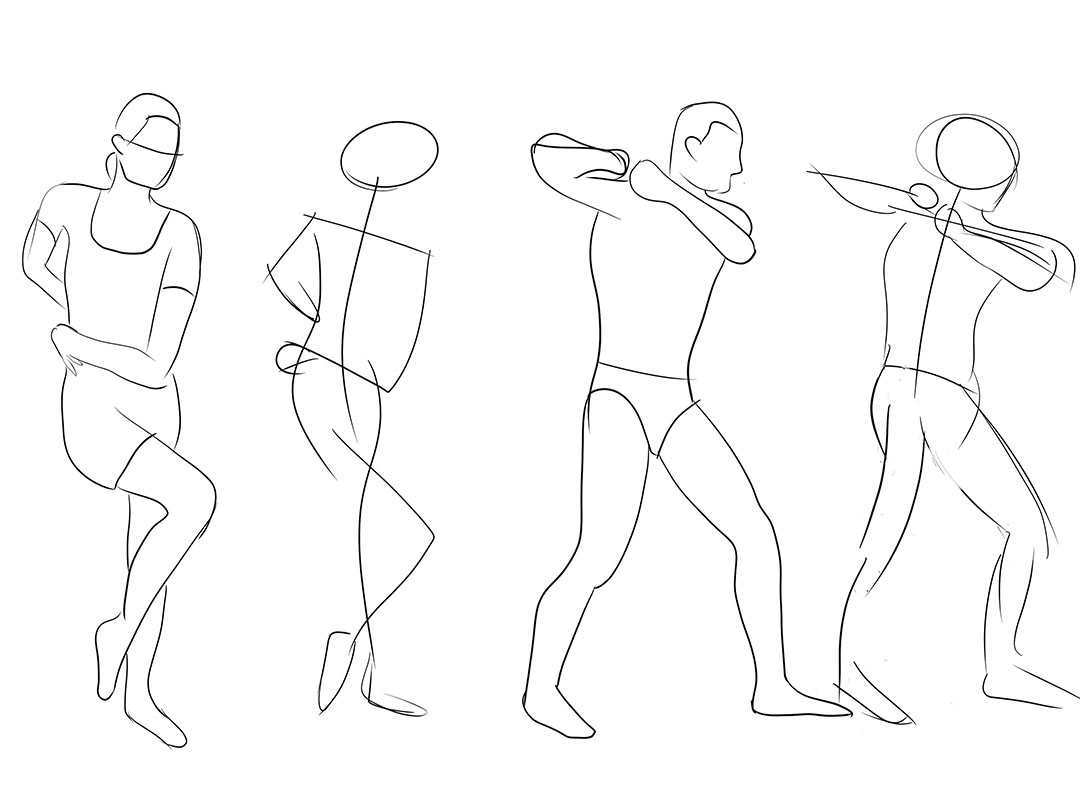
Quick drawing techniques that concentrate on capturing the action and energy of a subject, gesture, and pose drawing often range from 1 to 5 minutes. Practice this method to enhance your ability to create dynamic and fluid drawings. I like to visit a park or cafe with a small sketch pad and practice drawing the people around me. Since I live on an island, ferry rides are also a great place to observe and sketch people.
Another way to practice quick gesture and pose drawing is to search YouTube timed drawing videos you can practice along with. In addition, there are many books with photos for pose reference drawing.
Drawing poses — Standing, sitting, and lying down:
Practice sketching various poses, including standing, sitting, and lying down positions, to gain a better understanding of how the human body moves and interacts with its environment. I enjoy posing my ball-jointed dolls for model drawing practice when live models are unavailable. They are great pose reference drawing models!
Dynamic and action pose reference drawing:
Try challenging yourself by drawing dynamic and action poses. These help you develop your skills in capturing movement and energy in your drawings. You can also find YouTube videos of dynamic poses. With these essential aspects of human figure drawing techniques under your belt, you’ll be well on your way to creating stunning, lifelike figures.
Breathing Life into Faces: Capturing Expressions and Features
As you progress in your artistic journey, drawing faces is the logical next step after mastering the human figure. However, like many of you, I began with drawing faces. A well-drawn face can convey a wealth of emotions and stories, making your artwork even more compelling. In this next section, we’ll explore the essential aspects of drawing faces, from understanding facial anatomy to capturing various expressions. Let’s dive in:
The Fundamental Structure of the Human Face
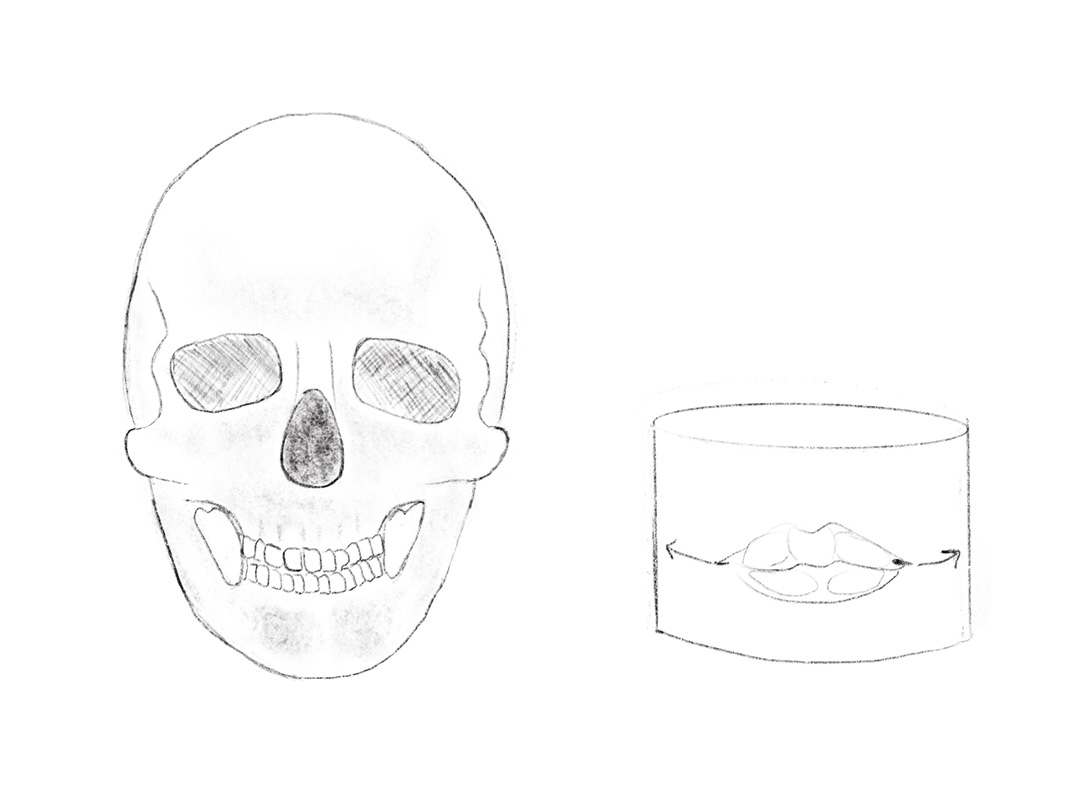
Skull: Acquaint yourself with the human skull’s structure, as it underlies the face’s framework. Take note of the eye sockets, cheekbones, and jawline shapes, as these features significantly impact the face’s appearance. Facial muscles: Investigate the facial muscles and their collaborative efforts to create expressions. This understanding will enable you to depict many emotions in your drawings. Use basic shapes to sketch the head. I usually begin with a circle, add a V-shape for the jaw, and connect the two forms with sloping lines.
Placement of Facial Features:
Practice drawing features from three head views: front, ¾, and side view.
Eyes: Improve your skills in drawing eyes of various shapes and sizes. Observe the curvature of the eyelids and the iris shape. When the head turns, the eyes’ size will differ.
Noses: Excel in drawing noses by concentrating on the bridge, nostrils, and tip. Bear in mind that noses are often sketched simply, with details added later through shading.
Mouths: Master drawing mouths by examining the lips’ shape, the mouth’s curves, and subtle variations in expressions. Mouths look better when the lines are simple.
Ears: Practice sketching ears from different angles, taking note of the intricate folds and contours that make up their inner structure, but again, it’s best to keep the lines simple.
Capturing various emotions: Enhance your ability to bring characters to life by practicing drawing a broad range of emotions, from joy and sadness to anger and surprise. By mastering these vital aspects of drawing faces, you’ll be well-prepared to create captivating and expressive portraits that narrate a story. This is a excellent beginning to character drawing.
The Art of Perseverance: Why Practice Makes Perfect in Drawing
Consistent practice and dedication are crucial to mastering face and figure drawing techniques, just as with any skill. Seeking shortcuts or quick fixes may be tempting, but there’s no substitute for investing time and effort.
Regular practice is of utmost importance for developing and refining your drawing abilities. Allocate time each day to draw, allowing you to track your progress, identify areas for improvement, and build on your existing knowledge.
Set achievable goals for your drawing practice to maintain motivation and focus. Break down your long-term goals into smaller, manageable objectives to work towards.
Face and Figure Drawing: Experimentation and Creativity
Don’t hesitate to venture outside your comfort zone and explore new techniques, styles, or subjects. Experimentation is essential for artistic growth, helping you uncover your unique voice and style. Embrace the creative process and remember that not every drawing must be a masterpiece. Mistakes are an inevitable part of the learning journey. In addition, don’t worry too much about finding your style. Relax, draw what interest you and your style will find you.
In conclusion, if you want to learn to draw figures, practice, patience, and perseverance form the foundation of success. By committing to regular practice, setting achievable goals, and embracing the learning process, you’ll be well on your way to becoming a better artist.
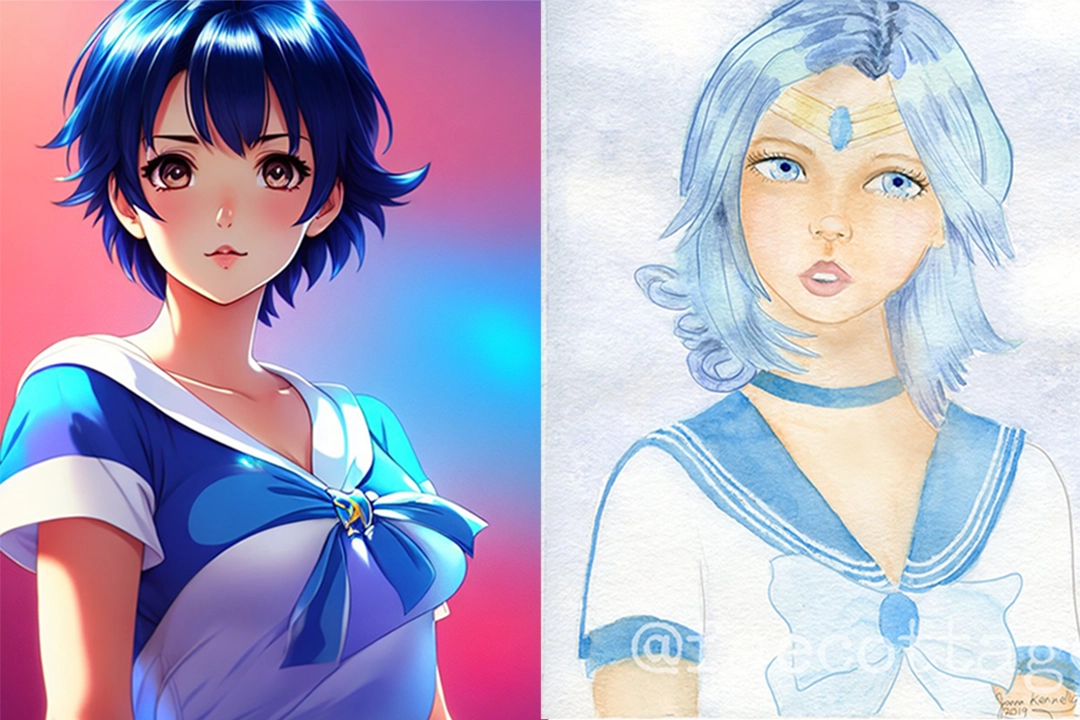
Sometimes, I used to wish I could press a button, and my artwork would instantly appear on my blank canvas. However, the emergence of AI-generated art has made me realize that the satisfaction gained from completing a piece of art through my own efforts far surpasses any quick fix that AI-generated art can offer. In addition, the benefits of creating traditional art, such as reducing stress and feeling a sense of accomplishment, outweigh the speed of creating. In truth, the struggle, the process of figuring things out, and the ultimate feeling of calm and peace that comes with creating something myself is a truly meditative experience. AI art vs. traditional art has been a hot topic in the art world for the past year, with people arguing both sides. My personal belief is that creating AI-generated art does not make someone an artist. Someone may be a great prompt writer. However, the sense of satisfaction that comes with creating something by hand cannot be replicated. Additionally, AI art doesn’t truly add anything new to the creative world. It simply recombines existing work. As humans, we have the potential to connect with something greater than ourselves. We can also create something entirely new. At first, I felt a huge disappointment that two of my favorite styles of drawing, Manga and Anime, were used to train some of the first AI. As a result, generating these types of images is very easy, no matter your skill level. It feels that something that took me years and years of practice is now accessible to anyone. All one must do is log onto a program and add some text prompts.
AI Art vs Traditional Art
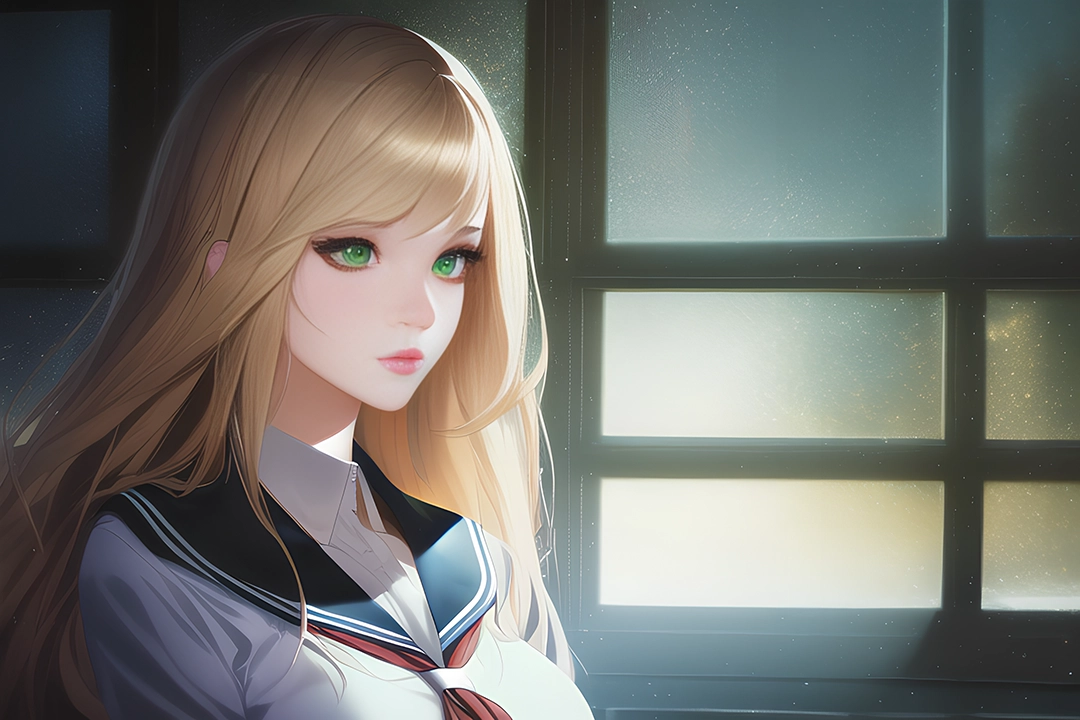
Last year, I decided to experiment with AI art generators to form a fair opinion. I quickly discovered that they could produce a wide variety of styles. Moreover, generating an image is especially easy when working with a single character.
However, creating scenes with multiple figures was often unpredictable and chaotic. Here are some common mistakes AI art generators often make: extra limbs, empty eye sockets, extra fingers, multiple heads, and heads on top of heads (what I call hat heads). Also, for some reason, AI has difficulty generating realistic hands.
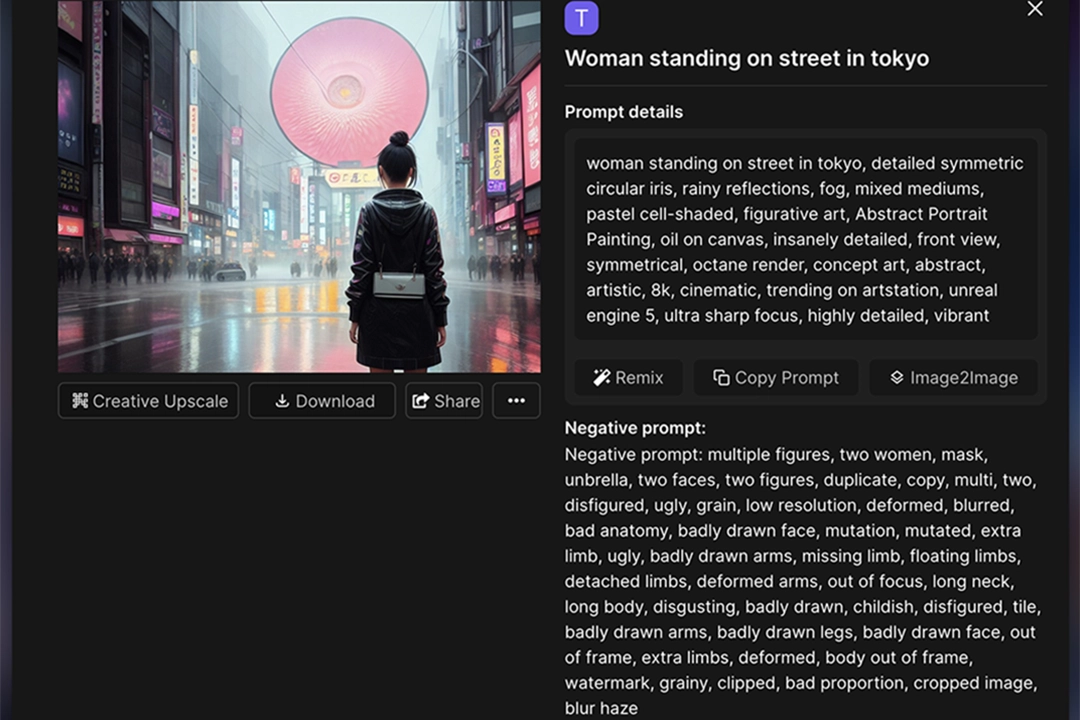
Surprisingly, mastering the art of crafting prompts for AI generators was a relatively simple process. I followed these steps:
I read some tutorials
Looked at other people’s prompts (which you can see in many of the generators)
Made a list of both the positive and negative attributes I wanted the program to use in its generation.
Soon enough, I created visually appealing works that could serve as references in the future. But, while the experience was fun, it didn’t replace the sense of accomplishment that comes with traditional art creation.
I saw a video on YouTube where an artist completed a drawing. At the same time, his brother generated images from the same prompt. In the time it took the artist to complete his sketch, his brother generated over 15 well-drawn pictures of a similar likeness.
The Art of Prompt Writing vs. Traditional Artistry
While prompt writing can be considered a skill, creating AI-generated art does not equate to being an artist. Both AI art and traditional art require discernment. But the similarities end there. If anything, prompt creation falls into the writing skill area. Thus, when there are art shows or competitions, it’s only fair that traditional art, digital art, and AI-generated art should have their own categories. In addition, AI-generated art should also be labeled as such. All this is not to say writing prompts that get high-quality results is simple. For example, look at the face of the dog in the image below. And also the right eye of the girl walking the dog. While most anyone can quickly generate attractive faces, a talented prompt writer can rerun and fix these mistakes when working with more complex images. As a traditional artist, though, if I were to draw or paint the image below, I would be fine fixing the errors myself as I drew. I’d consider the generated image as a reference the same way I do with photos.
AI-Generated Art: Recombination, Not Innovation
Contrary to popular belief, AI-generated art does not introduce groundbreaking concepts. Instead, these programs analyze existing creative works and recombine them. They are learning and starting from scratch in a cyclical manner. This process results in countless unique combinations but does not generate anything new or innovative. But it is also not stealing directly from artists, as many in the art community believe, because of the large number of images in the data set. On the other hand, humans can tap into a deeper creative well and originate new ideas. Our potential to connect with something greater and take the next leap is what distinguishes human-created from AI-generated art.
The Quest for Instant Gratification in Art Creation
However, when it comes to commercial art and graphic design, few people care who created the logo on their jar of peanut butter. I explained this to my teenage son recently. He is interested in an art career. We talked about the idea that companies and studios may look for artists who can both draw and create art themselves, but in addition, be familiar with prompting and how to generate images using AI-art technology because they will be able to produce faster results and save the studios money. When comparing AI art vs. traditional art, AI art wins in a fast-paced world where time is of the essence. The allure of instant gratification has found its way into the realm of art. AI-generated art promises an immediate result that is hard for hiring managers to resist.
The Role of AI-Generated Art in the Future
It’s up to us, the artists and collectors, to determine the role of AI art in the future. AI art-generating tools such as Midjourney and Playground.ai can be useful tools for making art references or photo-realistic blog images without copyright concerns. However, it is important to be aware of a recent decision by the U.S. copyright office. This decision announced that AI-generated works cannot be copyrighted. This could lead to the unauthorized use of your creations.
The fusion of AI-generated art with traditional human creativity may provide an exciting avenue for exploration. However, as humans, our ability to connect with a deeper source of inspiration and develop truly unique ideas sets us apart. Furthermore, no matter how fast AI’s learning ability or how elevated its intelligence becomes in the future, I don’t believe it has a spiritual connection to the divine that so many great artists through the centuries talk about, regardless of their spiritual tradition or culture.
In conclusion, the journey of learning to draw and create art may be time-consuming, but it offers invaluable rewards that AI-generated art cannot provide, such as stress reduction and a deep sense of accomplishment.
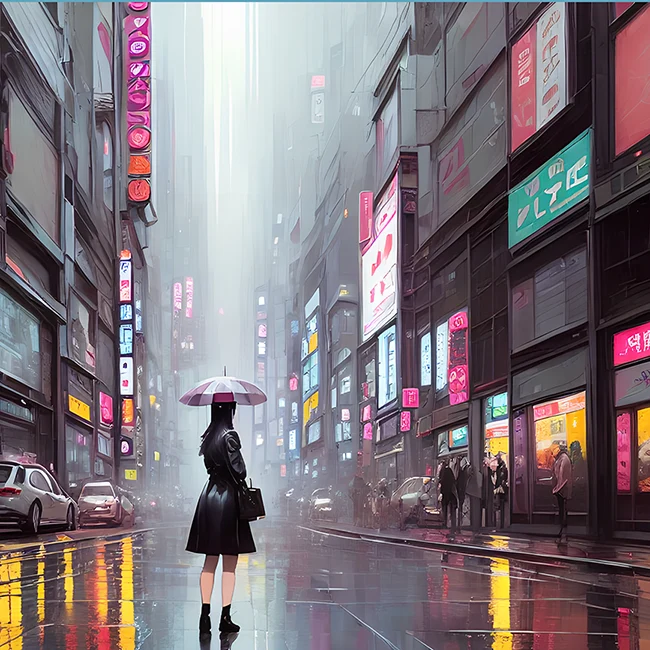
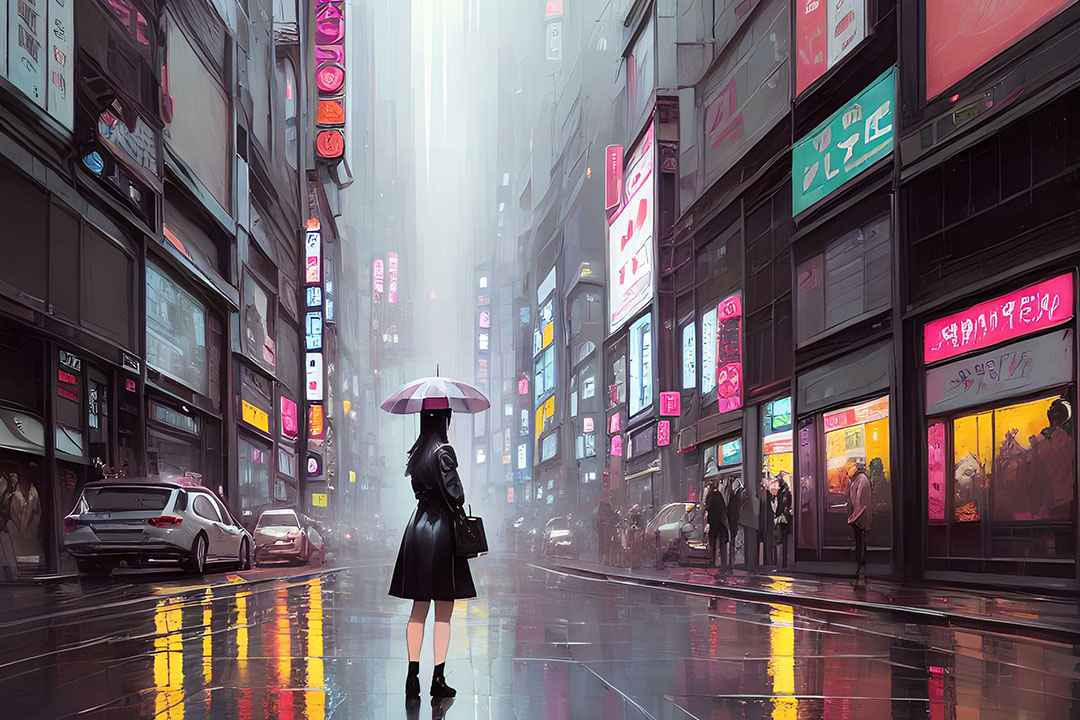
Please note, the artworks in this post were made using a combination of AI art generation and Photoshop. I will always try to label images on this website when they are made with AI.
As a child, two signs told me spring was here. Firstly, my grandmother’s flowering cherry trees burst into bloom. Soon her lawn would be covered in pink snow, which is the name she gave to the fallen petals.
Secondly, her tulips started to bloom in many of the same colors I painted my Easter eggs. This spring, with my state like so many others under quarantine, and strict social distancing orders from the governor, I was unable to walk through the commercial tulip fields and gardens. Instead, I ordered some tulip bulbs to plant in the fall.
Tulips, my Grandmother felt, are best enjoyed outdoors, because they don’t last long in the house. Walking through outdoor gardens, whether large formal ones, or just someone’s home garden, is something I’ve enjoyed since I was a young girl.
While I wait for the bulbs I ordered to arrive, I am starting more flower seedlings for fall bloom so that I can enjoy my own backyard garden longer.
When Social Distancing and Quarantine Didn’t Work
In my first post, Why Did I Wait so Long to Start a Blog?, I talked about caring for my mother at home. Shortly after I wrote that, her condition became worse. The last week of January, my husband took a couple of days off work to help me with her until we could move her to a nursing home. That event, pretty much turned our lives upside down for a few months.
However, at the time, Covid-19 seemed like a far off thing that would be stopped before it reached our countries’ borders. But by the end of February, her facility went on lock down. Even her dog, Barney, was not allowed in. I still take him with me when I visit twice a week. I write her letters, and bring snacks. We wave at her through the glass door. Sometimes the nurses open it a crack, but she can’t hear me.
Unfortunately, their social distancing and quarantine didn’t work. Somehow the disease found it’s way in anyway. The good news is, when I visited this past Sunday, the nurse told me they had tested her again, and she is now completely clear of the virus!
Someday, I will be able to hug my mom again, and take her dog to sit on her lap. In the meantime, I take her little bags with snacks, magazines, romance novels, and flowers.
My Village is Empty
Much of my state is still in stage 2 of the governor’s “stay at home” order.
I worry for the local shop owners. Especially because many of them reply on summer tourists. I worry for my hairstylist and dental office, who had to cancel all of their appointments for months, and are still severely restricted. And I wondered why big box stores like Target and Walmart could remain open, but not small boutiques?
We do need to protect our vulnerable populations. However, the rest of us need fresh air, to be in nature if we can, and to calm our minds, because anxiety weakens our immune systems.
Social Distancing Changed How We Work and Exercise
Most of us still need to work. Thankfully, my husband was able bring his computer, and two monitors to work from home. I love having my husband at home! Hopefully it will be a permanent thing, him working from home.
We share our small space in what is suppose to be a formal dining room. I paint, and he responds to emails, or whatever it is he does. But not everyone can work from home.
I’m lucky to live in the forest, far away from a big city. I’m so grateful the state parks opened again. I prefer to walk near my home with my dogs.
I’m an introvert. Thus, I love being at home. Social distancing is easy for me. I just don’t like being told what to do.
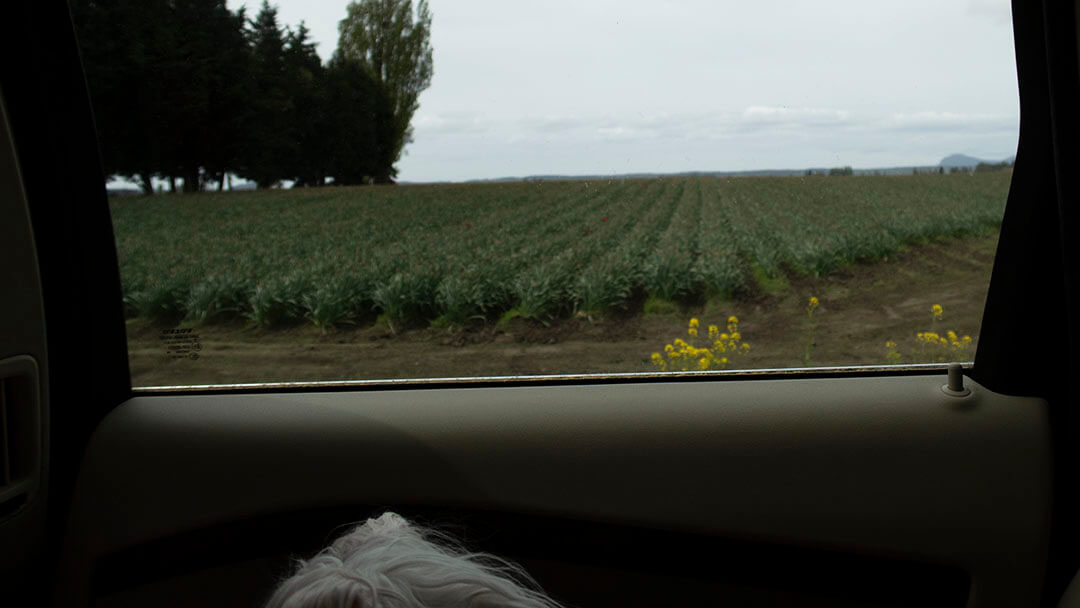
Viewing the Tulip Fields Online and Through the Car Window
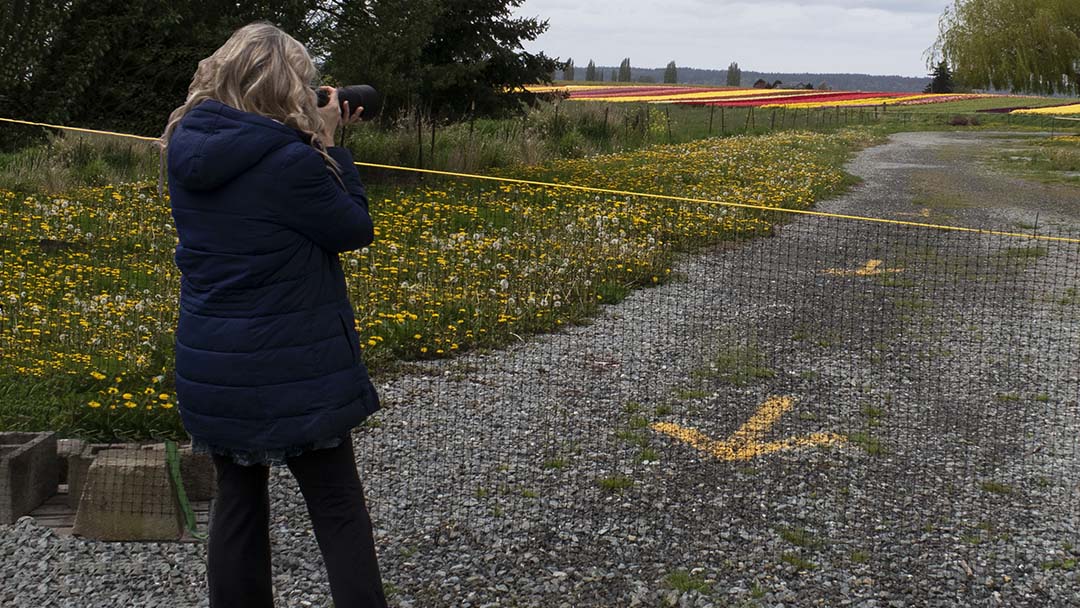
Every year for I don’t know how long, my family drives to Skagit County in Washington State to tour the tulip fields, buy bulbs, and take photos. This year, I planned to take along a couple of my BJD dolls for the photo-shoots.
However, for the first time in forever, the festival is canceled. Unfortunately, it’s not like a Comic Com that can be rescheduled. Tulips only bloom once a year.
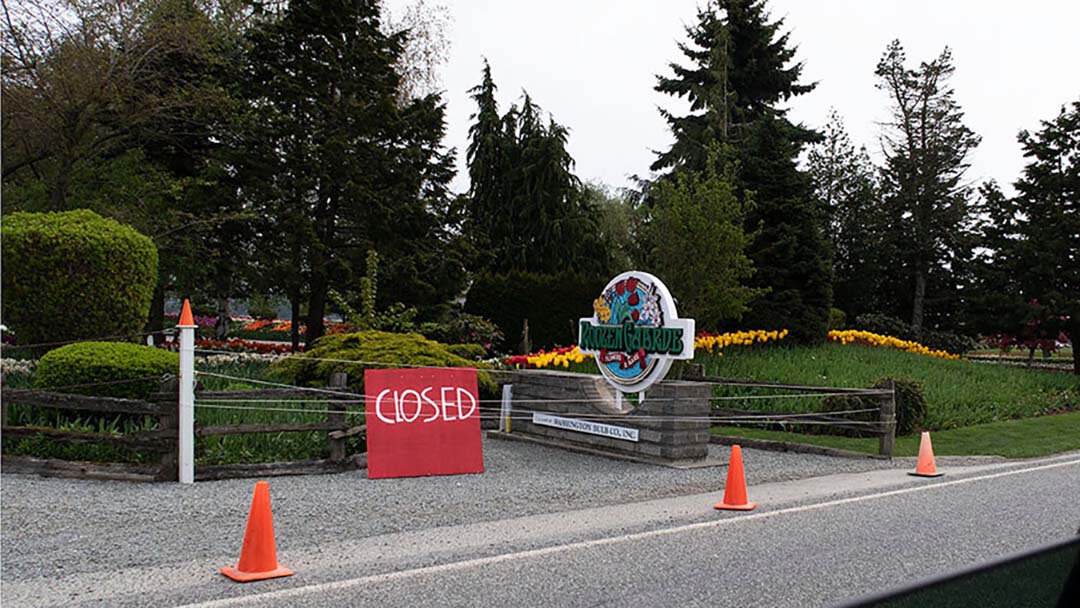
One of the main growers, Roozengaade, started growing tulips 50 ago. Although this year their gardens and fields are closed to visitors, they shared virtual tours through their Facebook page daily. On their website, they sell both cut flowers and bulbs which are shipped in the fall. We were hoping to purchase flowers there to take to my mom, however they were completely closed to the public.
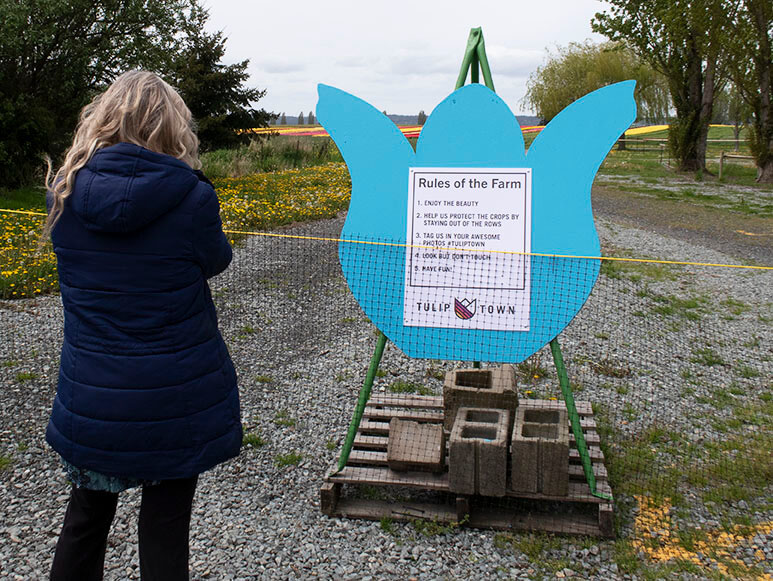
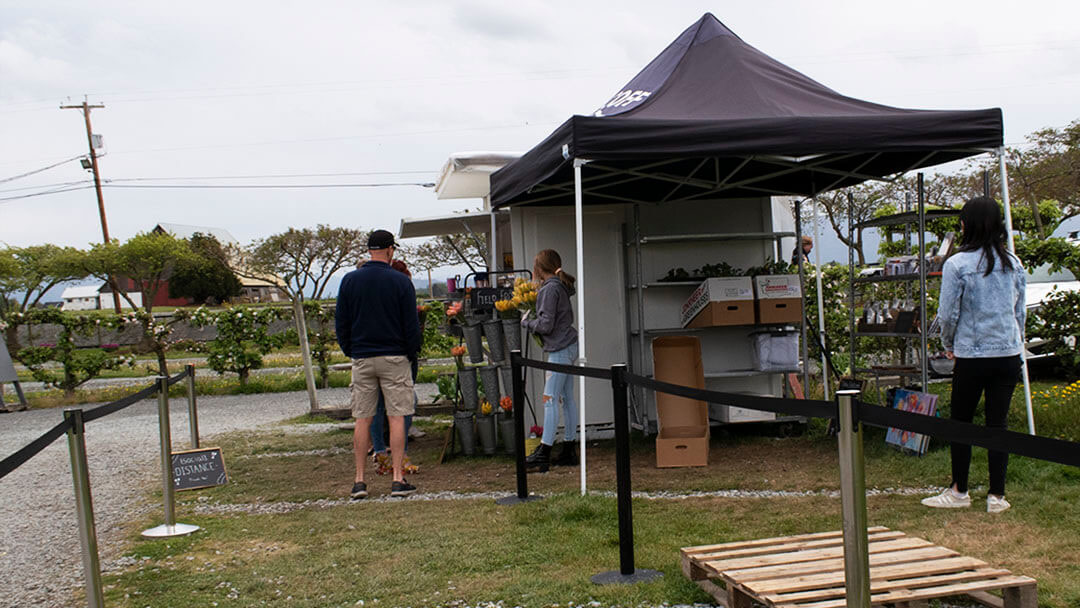
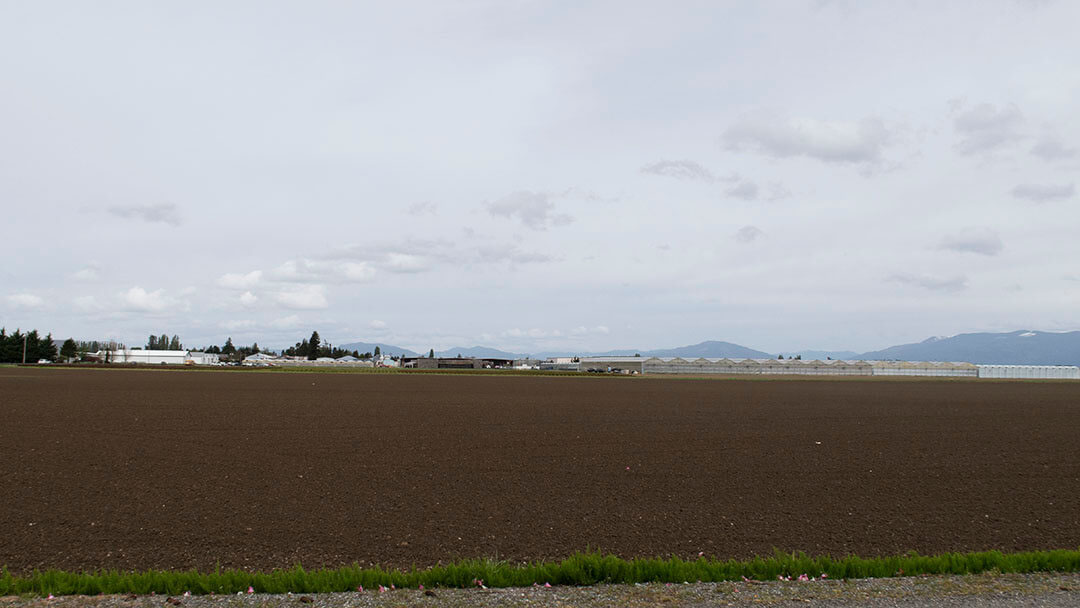
Luckily, the other large grower, TulipTown was allowing people into their parking lot to buy flowers at their small stand, and view one of the fields still in bloom from a distance. They also gave us a map of where the different fields were located, but many of the bulbs had already been harvested in early April, or the flowers headed.
If I Can’t Walk the Tulip Fields, at Least I Can Paint Them
Originally, I planned to write about my sadness for the festival’s closure, and concern for the local tulip growers. It’s what I thought about when I started my tulip painting. I reflected on the hard work of the farmers gone to waste since people will not be able to walk through the fields of flowers, or the formal gardens, or see the beauty of everything in bloom.
If you look carefully at the painting I made though, notice there are tiny people in the background touring the fields, which we will be doing next April. As the banner on the TulipTown website says, “Live to grow another year”.
One bright spot is that the growers donated many flowers to local hospitals and nursing homes.
Sad Discoveries About the Commercial Flower Industry
While researching this article, I learned something interesting. Many of the flowers we purchase throughout the year come from far away countries, produced by large-scale growers. Many flowers are not grown responsibly, either for the environment, or the conditions the workers are exposed to due to pesticides.
A large proportion of cut flowers purchased for North American weddings and funerals are grown in South American hothouses. Some of these large commercial growers spray heavily with pesticides, many of which are banned in North America because of their dangers. An example is DDT. I remember my dad used to sprinkle something called diazinon dust on everything in our garden when I was a child. I looked it up, because I know it’s banned now, and it causes all sorts of bad effects.
Some of the commercial farms are starting to use beneficial insects to cut down on the amount of toxins. Hopefully their positive actions helps the local water supplies, and benefits local bird and animal populations in the future.
Working Conditions and Exposure to Toxic Chemicals
The flower industry, especially large growing operations in 3rd world countries, generally employ low-wage workers to plant and harvest their crops. These flower growers sometimes even use child labor, and frequently they fail to pay their workers a living wage. In addition, according to Pesticide Action Network, “A study of fern and flower workers in Costa Rica found that over 50% of respondents had at least one symptom of pesticide poisoning.” And of course, with weakened immune systems from the pesticides, and being unable to have social distancing they are at even greater danger for Covid19. However, just like with clothing, you can buy fair-trade flowers.
What Else You Can Do
1. Look for flowers and house plants what are certified to be sustainably grown. Some places to find these are your local co-op market, or health food grocery. Look for the VeriFlora™ Certified Sustainably Grown label, and the U.S. Department of Agriculture (USDA) Organically Grown label.
2. Buy from local growers. It helps the environment as well as your local economy. We are just heading into the season when farmers markets are opening around the country.In addition your have a chance to talk to the growers about their farming methods.
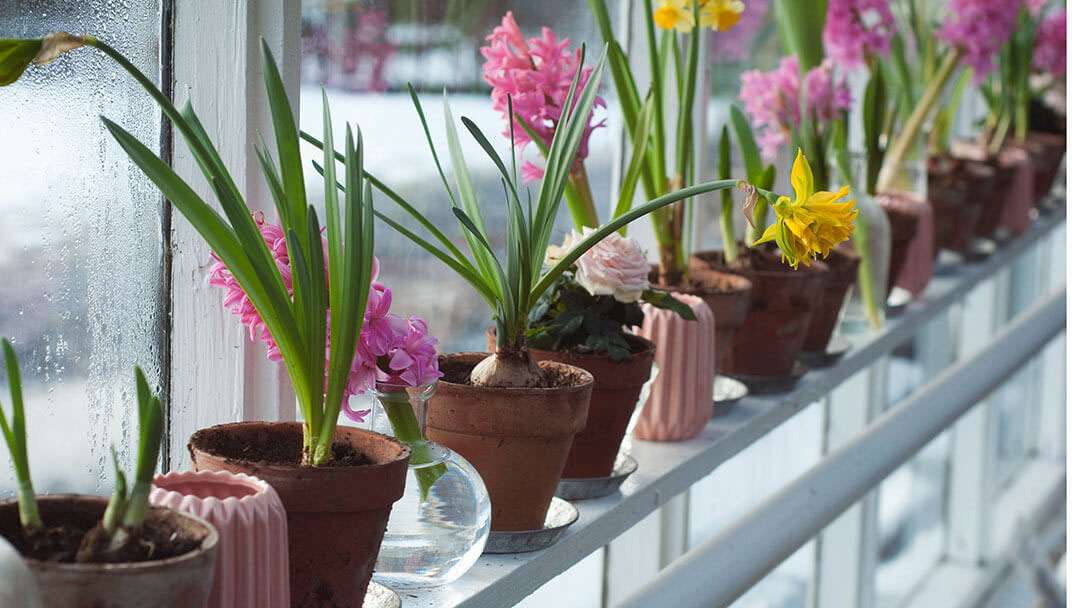
3. Plant your own flowers or bulbs. You will have bouquets throughout the summer months, and best of all, you can plant bulbs in pots, to bloom in a sunny window! During the winter months, buy flowering houseplants that are responsibly grown. Some houseplants flower for months, and with proper care, can be brought into bloom again.
4. Spend time out in your garden, even in the winter. The fresh air and sunshine helps us stay healthy. This year, for the first time, I spent at least a half hour out in my garden all winter, even on crummy weather days, because I wanted to let my chickens out, and didn’t want an owl to eat them. And this year for the first time in a long time, I was never sick, even through this was suppose to have been one of our worst flu seasons.
Plan a Cut Flower Section in Your Garden for Fall
Many of us live in an areas where the first frosts don’t happen until late October. That means that we still have over 90 germination days left for flower seeds to grow and bloom.
In September or early October, when you are out in your garden planting tulip and daffodil bulbs, you’ll be able to pick a bouquet to take into the house.
These are some of the best flower seeds to pick up at your nursery and plant this weekend. All of these have shorter growing periods and will make lovely bouquets.
Sunflowers come in so many varieties and colors. And they make beautiful bouquests on their own or mixed with other fall blooming flowers. They bloom 53 days after planting.
Asters take a bit longer, but if you plant now, you will have lovely blooms by September.
Zinnias are a favorite of mine. I love their bright colors. There bloom 60 to 70 days after planting.
Cosmos are a plant native to Mexico. There have more than 25 varieties. Their colors include pink, crimson, rose, lavender, purple, and a new chocolate shade. They all have bright yellow centers. They grow 2 to 5 feet in 83 days.
Sweet Peas just like their edible cousins, can be planted for a sweet smelling fall crop in mild climate areas. One thing I love about peas, they grow well in poor soil, and even improve the quality of it by adding their own nitrogen. Sweet peas mature in around 62 days. Many people, depending on their climate, feel peas actually do better in the fall.
Snap Dragons are a winner for fall because they can withstand some of the early frosts.
In addition planting flower seeds, you can also plant these bulbs for fall bloom: tuberous begonias, cannas, dahlias, daylilies, glades, lilies, and iris. If your spring was filled with too many rainy days to get your planting done, take heart, do it now, and go plant yourself a fall cutting garden!
Our Ancestors Instinctively Knew How to Make the Right Choices
If you want to live more sustainably, think what your ancestors would have done. My family was always out on the border lands, on the frontier, so maybe it is bred into my genes to behave responsibly, or know how to stay safe and survive. There is probably also a bit of rebellion bred in too. But I must have also inherited a love for all things beautiful.
I only have stories of my ancestors, and the challenges they faced, but I had the privilege of spending a lot of time with my grandmother as a small girl. She would have been an Edwardian Lady when she was a young woman. Her garden bloomed from early spring until late in the fall.
In her day, only the very wealthy could afford year round cut flowers in their homes. These were probably grown locally in a greenhouse. For the middle class, they waited until spring to buy from the local market, and they grew their own flowers for bouquets.
I’m sure my grandmother spent many happy hours planning additions to her small backyard garden. She was also a talented watercolor artist. She not only loved to grow beautiful flowers, she loved to paint them too.
One of the things I love best about living on an island is having an ancient and beautiful forest close by. We have so many opportunities for day hikes without the long drive. The state park on the south end of the island is one of my favorites places to walk in the woods. Until a couple of years ago, it was a camp ground too. The trees here are huge and many of them are over 500 years old.
They are magnificent!
Nature reclaims herself quickly. It’s hard to believe large RV’s once wound their way around the narrow roadways, and noisy children road their bikes along these paths. Now, it’s a ghost forest. I only occasional meet another hiker or dog walker wandering here though overgrown camp sites. The campground closed after a large windstorm what left the park unsafe for campers. The choice was whether to cut many ancient trees or close the camp area. I always side with the trees. This time, the forest service did too.
I love walking in this beautiful forest when I am trying to figure out a problem with my sculpting, or when I need inspiration for a new project. It’s my favorite place to walk and to be when I am feeling a lot of anxiety in my life.
We found the Wilbert trail by accident one winter afternoon. A recent wind storm had blown trees across the other trail we usually followed down to a secluded beach. One really lovely things is because this is a state park, dogs are allowed on their leashes. We always hate to leave our dog, Chloe, home when we are going for a hike, even though we often end up carrying her back after she gets tired out! The highlight of this trail is the ancient Western Red Cedar that saved this beautiful forest.
Back in the 70’s loggers came to the island to cut the last of the old growth trees down on the south end. But lead by a husband and wife, Mary and Meryl Wilbert, through the organization, Save the Trees, the islanders literally wrapped themselves around these ancient giants. Their actions not only saved those trees, but over 255 acres of beautiful forest that is now a state park.
You can’t get to the ancient cedar anymore because of a new threat to it. The threat of too much love and attention. The soil around the base of the tree has become compacted because so many people walked around it. Now there is a rail about 10 feet away and we have to admire it from here. There is a small bench nearby where I love to sit for a while and enjoy its peaceful energy. Like giant Sitka Spruce trees down on the southern Washington coast, these trees were already giants when Lewis and Clarke first arrived at the Pacific Ocean.
It really makes you think about longetity and how short our human life spans are. We only have a small about of time to accomplish our goals and make a difference.
Another part of this beautiful forest that I love is a boggy area where the water runs under the roots. You can hear it moving under the ground and in places it bubbles up in small streams and pools.
One of the cedars has a root that curls out in front of it making the perfect spot to sit and listen to the water moving beneath. Another is almost as large as the Wilbert tree, but about 15 feet off the ground, it splits and a large branch comes off the side of it. It took me a while to realize that it wasn’t a branch at all but a Doulas Fir tree living symbiotically off of the Cedar. The Western Red Cedar leans in the one direction and the Doug Fir to the other. I suspect it is the weight of this fir tree that keeps them both from toppling over. I love to stop on this part of the trail, lean my back against them, and feel the energy of these ancient giants flow into my heart.
On a walk with my son recently, he told me about how he had learned in school that scientists have detected that trees have a measurable heartbeat. It turns out trees have a heartbeat too. At night they move their branches up and down like a pump in slow cycles the scientists have only just discovered. It corresponds with the uptake of water moving toward the top of the tree through the trees veins which are called tracheids.
Deep in this beautiful forest, these are my favorite trees.
The last photo above is the Norwegian Spruce that my father planted the first Christmas in our new house. When my mom finally had to sell our family home, her next door neighbors decided to sue her because we (well, me actually) had refused to cut it down for years. It was ruining their plan to pave a wide asphalt driveway all the way to her property line. I couldn’t watch the day that tree was cut down, and I never wanted to drive by the house again. That was a battle I lost. But it doesn’t mean that I won’t go to war for the Ents again. Some people even believe the trees are waking up.
This last Christmas we planted a new Norwegian Spurce in our yard. One that will never be cut down by nasty neighbors. And along with the Redwoods I’ve planted here, someday this will be an ancient and beautiful forest.
So I challenge you, what do you care about passionately? What would you do if you knew that your one small voice or action could make a difference? Be like the islanders who saved a beautiful forest. We don’t win all of our battles. But if we don’t even try, we’ve already lost. Arbor Day is on this coming Friday. Go hug a tree!
The other day I was out walking in the woods, and thinking about about the conversation in a Facebook group I belong to some time ago. In particular someone had said, “Why paint a tree when you can grow a tree?” I don’t know. Maybe ask Monet.
Monet’s poplar series of paintings was so inspiring to me in college. There was a row of tall poplars along a pathway that overlooked a lake on my campus. I could see them out the huge windows of one of the fine art classrooms.
I loved those trees.
I used to have little picnics under them with my boyfriend. I think great painters are capturing a bit of magic. A moment in time. If it wasn’t for Monet, I might never have noticed that row of tall trees that ran along the ridge overlooking the lake. I might not have spent hours walking there. Sometimes I pretended that I was walking on the moors in England and sometimes the gardens of France. (Obviously, I wasn’t a math major.) That place still feels magical to me. Because of Monet, I discovered it.
Have you ever had a dream to start a hobby or try something new? And then someone came along and said to you, “Why would you want to do this? Or, “That’s just a waste of your time!” Maybe you wanted to learn to play the guitar, but your parents thought that you should be studying. Or you wanted to write poetry instead of essays. And so the dreams got put on hold.
It’s never too late to restart your dreams. It’s never to late to try something new just because you didn’t learn it as a child. There is a dance school where I live that started an adult ballet class and it has become one of their most popular classes.
One of my dreams is not only to learn to paint in the traditional style someday, and to learn how the old masters created their pigments from what they found in nature (I know, some of this stuff is very toxic. I will be careful), but also to travel to as many museums in Europe and the East Coast to see their work while I still can.
Many of you remember the images of the looting of the museum of ancient artifacts while the Iraq war was going on, and while the troops were defending the oil fields. It was heartbreaking. We always assume that these treasures will always be there, but history tells us otherwise. So if there is an exhibit touring in your city, try not to miss it. It might be the last chance to see that work forever.
In the 70’s there was a tour of the treasures of King Tut’s tomb. My uncle had been fascinated by Egyptology his whole life, so he and my aunt went to see it. My parents decided the drive to Seattle was too far, or maybe they just weren’t that interested. A few years ago, there was another tour of some of Tut’s treasures. This was hailed as the last time any of the treasures are allowed to be exhibited outside of Egypt. It was a limited show compared to the first one. But I made sure that I didn’t miss it and took my son. If I never make it to Egypt, at least I saw a few of the items found in his tomb in person! If you were lucky enough to like in New York, Paris, or London, the treasures did make one last tour. Now, I can only hope to visit Egypt one day.
I know a lot of people don’t like to go to museums. They find them stuffy. And I don’t pretend to like modern art much. If you want to nail your painting to a wall with a big spike, go ahead. I’m talking to you, Neo-Dada.
We are all inspired by different things. But I feel like the classical artists had a connection with nature that we have lost in the last century when most people in the world have taken to urban living. Studying these artists works reconnects us again. It might inspire you to take a walk outside at lunchtime instead of sitting in a windowless lunchroom. Or taking a day trip on the weekend and going for a hike.
For me, connecting to nature went way beyond that and I now live in a forest. I often take long walks in an ancient wood or along a nearby beach. Those places inspire my own artwork. And I can trace it all back to studying so many of the classical artists in college.
What I learned from Monet is that when you paint or sculpt an object over and over, you learn things about it that you could never know otherwise. You don’t just paint the tree, you know the tree.
Get acquainted with Clip Studio Paint (CSP). This versatile digital art software is reshaping the drawing landscape as a compelling Photoshop alternative. It caters to both aspiring artists and experienced professionals. Its comprehensive set of tools helps bring creative visions to life. This beginner’s guide to Clip Studio Paint will explore essential features and techniques to set you up for success as you begin your artistic journey with CSP.
This guide is designed for first-time users. Make sure to install the Clip Studio Paint app on your computer. If you’re eager to explore the software’s capabilities, let’s begin. We’ll cover topics such as setting up your workspace, mastering the basics of layers and brushes, and utilizing official resources to enhance your skills.
Before downloading the Clip Studio Paint app onto my computer, I used Photoshop for over 20 years. While I still love Photoshop’s photo editing capabilities, I use CSP almost exclusively for drawing. Now that Clip Studio Paint can be downloaded onto tablets and phones, it may eventually replace my use of Procreate. However, at the moment, I find they both have their strengths.
By the end of this guide, you’ll have a solid foundation to build upon, empowering you to unleash your creativity with confidence. Ready to jump right in and discover the limitless possibilities awaiting you in Clip Studio Paint?
Crafting Your Ideal Workspace in Clip Studio Paint
A well-organized workspace maximizes your efficiency and creative potential in Clip Studio Paint. In this section, you’ll learn to customize the user interface, organize panels and windows, and select the most valuable tools and settings for beginners. I have reset my workspace to default for the photos in this post to make following along less confusing. However, if you are a Windows or Linux user, your workspace may differ since my system is running on a Mac.
Customizing the User Interface
CSP offers a highly customizable interface, allowing you to personalize your workspace to suit your preferences and workflow. Just click and drag the panels or toolbars to rearrange the elements and move them to their desired locations. In addition, you can dock panels together or stack them in tabs for easy access.
If you wish to reset the layout, go to the main menu, click on “Window,” then select “Workspace,” and choose “Reset to default.” I, for one, love this option because I share a Wacom tablet with my son.
Organizing Panels and Windows
Effectively organizing panels and windows will help you streamline your creative process. Essential panels for beginners include: Layers, Tool Property, Color, and Navigator
How to Display a Panel
Go to the main menu
Click on “Window”
Select the panel you want to show
To close a panel, click the “x” icon in the panel’s upper-right corner. For a cleaner workspace, you can collapse or expand panels by clicking the small arrow icon next to the panel’s name.
Recommended Tools and Settings for Beginners
As a beginner, it’s helpful to familiarize yourself with CSP’s most commonly used tools. These tools include the Brush, Eraser, Selection, and Text tools. You can access these tools from the toolbar on the left side of the workspace. Additionally, make sure to set up your preferences to optimize your workflow. To do this:
Go to the main menu
Click on “File”
Select “Preferences”
Here, you can adjust settings such as canvas size, units, and undo levels. Again, remember to save your settings before exiting the Preferences window.
Unleashing Your Creativity: Mastering the Basics in Clip Studio Paint
When starting your exploration of Clip Studio Paint, it is crucial to understand the core features. Then, building on these techniques will provide a solid foundation for your creative journey. In this section, we’ll explore the fundamentals of working with layers, essential tools and brushes, and basic techniques for drawing and coloring.
Working with Layers
Layers are a crucial aspect of digital art, allowing you to create, edit, and organize different artwork elements separately. Mastering layers will help you unlock the full potential of CSP.
Understanding layers and layer types: In CSP, there are various layer types, including raster, vector, and text layers. Each type serves a different purpose and can be used for specific tasks, such as sketching, inking, or adding text. To create a new layer, click the “New Layer” button at the bottom of the Layers panel.
Organizing and managing layers: Keeping your layers organized will make your workflow more efficient. Rename layers by double-clicking their names in the Layers panel, and use folders to group related layers together. You can also change the order of layers by clicking and dragging them up or down in the panel.
Layer blending modes and opacity: Blending modes determine how a layer interacts with the layers beneath it. To achieve various effects, experiment with different blending modes, such as Multiply, Screen, or Overlay. One of my favorite modes is “Clip to Layer Below.” I often use this when adding shading. It ensures that only the part of the drawing I want shaded is affected. In addition, you can adjust the opacity of a layer by moving the Opacity slider in the Layers panel.
The differences between Pro and EX: While CSP Pro offers many features suitable for most users, CSP EX includes additional capabilities. I chose EX over Pro when I recently upgraded because Ex can create multiple-page documents, similar to Adobe InDesign’s book documents. Also, EX is better for creating comic long-form layouts used in WebToons, and lastly, it can create animations. Evaluate your needs to determine which version best suits your creative goals.
Beginners Guide to Clip Studio Paint Essential Tools and Brushes
Clip Studio Paint offers an extensive array of tools and brushes to help you create stunning artwork. First, familiarize yourself with the following essential tools that you will probably be using most often:
The Pen tool: The Pen tool is your primary drawing tool in CSP. Access it from the toolbar on the left. Experiment with the various brush presets available. You can customize brush settings in the Tool Property panel. You can also download additional brushes from the Clip Studio Assets page.
The Eraser tool: The Eraser tool, also found in the toolbar, allows you to erase parts of your artwork. Like the Brush tool, you can modify eraser settings in the Tool Property panel.
The Selection tools: Selection tools enable you to isolate specific areas of your artwork for editing. CSP offers several selection options, including the Marquee, Lasso, and Magic Wand tools. Access these tools from the toolbar and adjust their settings in the Tool Property panel.
Fill Tool (Paint Bucket tool): Use one of the selection tools to define an area, then use the Fill Tool to fill the entire area with color.
Essential Techniques for Drawing and Coloring
Mastering fundamental drawing and coloring techniques will set the stage for your artistic growth in CSP.
Sketching and inking: Start with a rough sketch using a brush or pen on a new layer. I typically draw with the G-pen which is standard, however many artists create or download pens or pencils. Once you’re satisfied with your sketch, create a new layer for inking, and use a pen tool to trace over your drawing. When finished, hide the sketch layer.
Coloring with the Fill tool: The Fill tool, located in the toolbar (looks like a paint bucket, which is how I refer to it), allows you to fill enclosed areas with color quickly. Create a new layer beneath your line art and use the Fill tool to add flat colors to your artwork.
Shading and blending techniques: Add depth to your artwork by applying shading and highlights on separate layers. Use a soft brush or the Airbrush tool to shade.
Enhancing Your Artwork: Utilizing CSP Brushes
Clip Studio Paint boasts a vast collection of brushes, enabling you to find the perfect tools to create a wide range of artistic effects. This section will discuss how you can browse, download, and manage brushes to elevate your work.
Browsing and Downloading Brushes
CSP offers a rich library of brushes, both built-in and community-created. To access additional brushes:
Visit the Clip Studio Assets website or open the Clip Studio application and click the “Assets” tab.
Use the search bar to find brushes based on specific keywords or browse through popular and recommended brushes.
Click the download button or the cloud icon on the brush’s preview image to download a brush.
Installing and Managing Brushes
Once you’ve downloaded brushes, install them in CSP to use them in your projects. Follow these steps to install and manage your brushes:
Open Clip Studio Paint and go to the “Sub Tool” panel.
Click the small wrench icon in the bottom right corner of the panel to open the “Sub Tool Detail” window.
In the “Sub Tool Detail” window, click the “Import” button and navigate to the downloaded brush file (usually a .sut or .clip file).
Select the brush file and click “Open” to install the brush in CSP.
After installing the brush, you’ll find it in the “Sub Tool” panel under the appropriate tool category (e.g., Brush, Pen, or Pencil). To keep your brushes organized, create custom sub tool groups by right-clicking on an existing group and selecting “Create New Sub Tool Group.” You can then drag and drop brushes into your new group for easy access.
As you expand your brush collection and hone your skills, you’ll discover how CSP brushes can significantly enhance your artwork and help you easily create stunning visuals.
Importing and Exporting File Formats
CSP supports various file formats, allowing you to integrate them with your existing workflow seamlessly. Some commonly used file formats include:
PSD: Adobe Photoshop’s native file format, which preserves layers and blending modes for easy editing in CSP.
PNG: A lossless image format with support for transparency, useful for sharing finished artwork or individual elements.
JPEG: A widely-used compressed image format, ideal for sharing completed artwork online.
To import a file, go to the main menu, click “File,” and select “Open.” Then, navigate to the file you want to import and click “Open.” To export your artwork, click “File” in the main menu, choose “Export (Single Layer)” or “Export (Multiple Layers),” and select the desired file format. Adjust the settings as needed and click “OK” to save your file.
Embarking on Your Creative Journey
As we conclude this beginner’s guide to Clip Studio Paint, it’s clear that this app offers a wealth of features designed to help you unleash your creativity. From setting up your workspace to mastering the fundamentals and using brushes, CSP provides an amazing platform for artists at all stages. It’s become my go to program when I want to draw Faces or Figures.
As you continue to explore Clip Studio Paint, experiment with its vast array of tools and techniques to develop your own unique style. Don’t hesitate to push your creative limits, and always remember that practice leads to mastery. The more you use CSP, the more confident and skilled you’ll become.